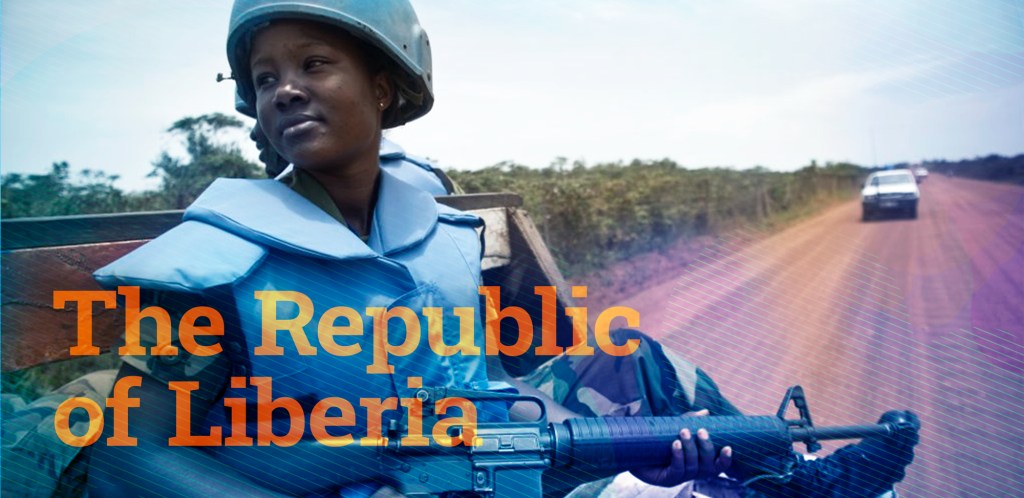
This project profile page contains information about The Republic of Liberia Armed Forces project including project results, impact, and effective practices. This page will be updated annually in line with EIF project reporting requirements.
Data source: United Nations Peace Security Data Hub, a free public library of datasets on peace and security published by the United Nations
T/PCC
Updates
2020
2021
2022
2023
2024
2025
Total
%
Total
%
Total
%
Total
%
Total
%
Total
%
Liberia
18
13.53%
22
12.79%
21
12.21%
18
11.54%
6
50.00%
10
43.48%
Experts on Mission
3
75.00%
3
75.00%
3
75.00%
2
40.00%
2
50.00%
2
50.00%
Individual Police
0
/
2
40.00%
3
37.50%
2
50.00%
4
50.00%
8
44.44%
Staff Officer
1
8.33%
2
15.38%
2
16.67%
2
20.00%
0
/
0
0.00%
Troops
14
11.97%
15
10.00%
13
8.78%
12
8.76%
0
/
0
/
The Republic of Liberia Armed Forces
The Armed Forces of Liberia (AFL) is the national military institution responsible for safeguarding Liberia’s territorial integrity, supporting national disaster response, and contributing personnel to United Nations Peacekeeping Operations. Operating under the authority of the Ministry of National Defence, the AFL plays a key role in Liberia’s engagement in regional and international peace and security efforts. As a post-conflict institution, it continues to strengthen its professionalism and alignment with international standards, including commitments under the Women, Peace and Security agenda.
Women remain underrepresented within the AFL, particularly in roles linked to deployment in United Nations Peacekeeping Operations. Structural and institutional barriers affecting recruitment, preparedness, and deployment have limited the full participation of women within the force. Addressing these barriers is a strategic priority for the AFL as it seeks to enhance both its operational effectiveness and the inclusiveness of its contributions to international peace operations.
Project Overview
This project will support the Armed Forces of Liberia to strengthen women’s participation in United Nations Peacekeeping Operations by expanding the pool of female personnel who are eligible for deployment. Informed by the 2022 Measuring Opportunities for Women in Peace Operations (MOWIP) Barrier Assessment, the project is designed to address key institutional constraints across the deployment pipeline, from recruitment and pre-deployment readiness to deployment conditions and organisational accountability.
The project will be implemented by UN Women in partnership with the Ministry of National Defence and the Armed Forces of Liberia. It will combine targeted recruitment and awareness-raising initiatives with enhanced pre-deployment training and institutional capacity-building. Planned activities include outreach to encourage women to pursue military careers linked to peacekeeping deployment; skills-based training to strengthen readiness for deployment; and support to institutional mechanisms that promote gender-responsive policies and safe working environments. The project will also promote access to gender-responsive support services and make use of digital and mobile approaches to strengthen the reach and sustainability of these efforts.
PROJECT STATUS
Approved
EIF Results Framework
EIF Outcome 3
Total Approved EIF Budget
US$663,792
Funds transferred as of 31 December 2025
US$663,792
Beneficiary
Armed Forces of Liberia
Fund Recipient
UN Women Liberia
Implementing Partner
Armed Forces of Liberia
Planned Project Duration
24 months
Project Approval Date
26 November 2025
Project Start Date
11December 2025
Project End Date
10 December 2027
Project Revision(s)
N/A
Total Project Duration
24 months
Project Deliverables
40 nationwide recruitment and outreach initiatives targeting secondary and tertiary institutions, reaching at least 3,000 young people online and 125 young women to apply for enlistment in the AFL.
Mentoring and pre-deployment training for 147 women soldiers, covering core operational, language, and gender-related competencies, with 87 women expected to qualify for UN peacekeeping through UN selection and assessment processes assessments.
Review and revise recruitment and retention policies, as well as development of whistleblower, sexual harassment, and SEA policies.
Eight (8) targeted trainings for AFL personnel and beneficiaries on prevention of SEA and sexual harassment, with at least 98% of SEA and harassment cases investigated and resolved on time.
Provision of reproductive health services,mental health and psychosocial support for 247 soldiers (147 women, 100 men), distribution of dignity and hygiene kits for 147 women, and sexual and gender-based violence (SGBV) capacity strengthening for staff at the 14th MilitaryHospital.
Results and Impact
The project is expected to contribute to an increased poolof women within the Armed Forces of Liberia who are eligible for deployment to United Nations Peacekeeping Operations,through targeted recruitment, pre-deployment training, and improved access to deployment-relevant skills. Through capacity-building, policy review, and the provision of gender-responsive services, the project is also expected to support ongoing efforts within the AFL to address institutional barriersto women’s participation in peace operations and encourage more gender-responsive practices over time.