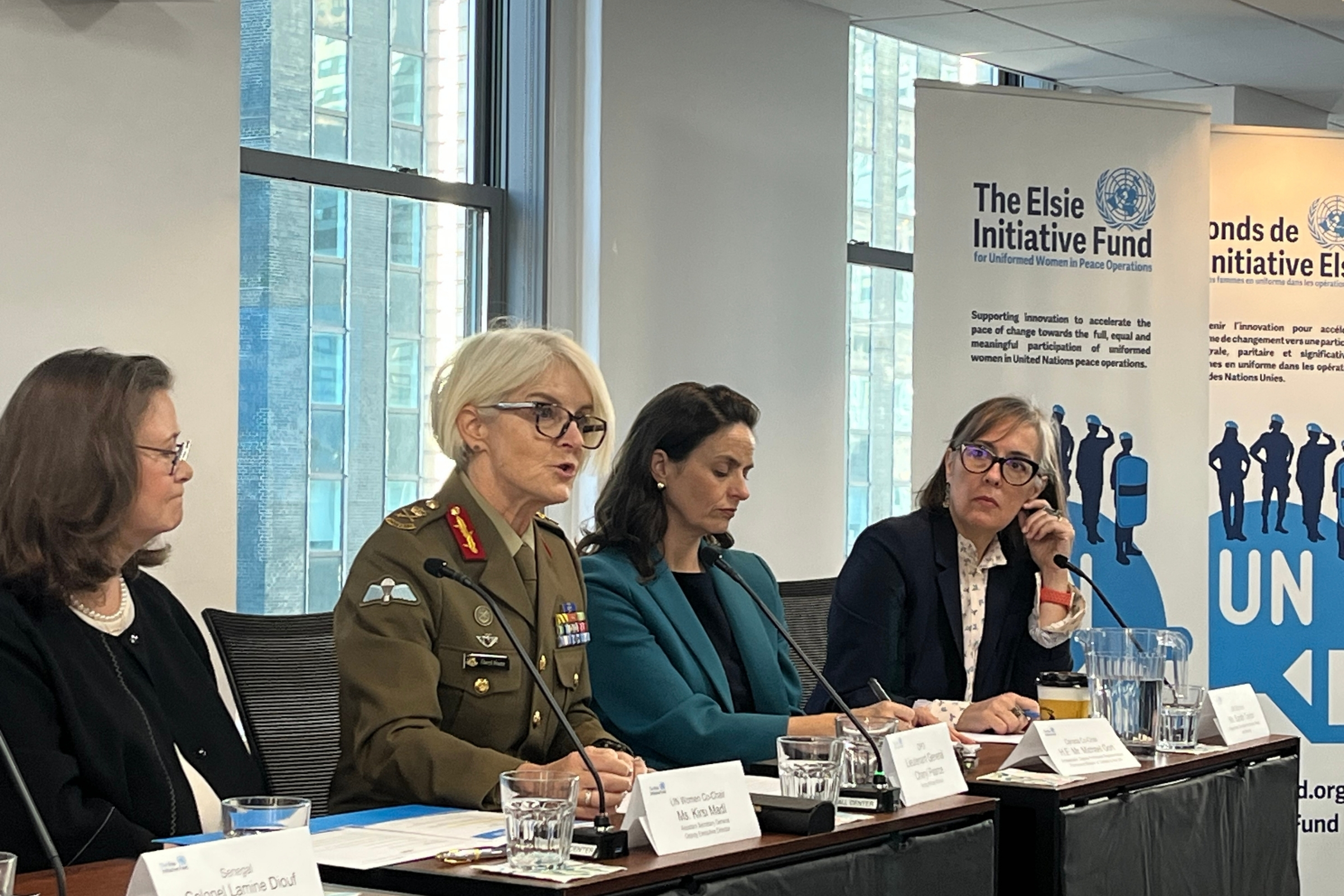
Lieutenant General Cheryl Pearce is the highest-ranking uniformed woman in the United Nations (UN). As Acting UN Military Advisor, she oversees the delivery of military capabilities to UN peace operations. In her previous role, Lieutenant General Pearce was appointed as Force Commander of the UN Peacekeeping Force in Cyprus (UNFICYP) between 2019 – 2021. With 40 years in the military, Lieutenant General Pearce shares her insights into how she successfully navigated the military’s traditionally ‘hypermasculine’ space, emerging as a dynamic and authentic leader.

What was your motivation behind a military career?
I always had a sense of service, even as a teenager. I first considered joining the police force. But during work experience, I came across defence recruiting – and that changed everything. Loxton, my hometown, had a strong military history, with many from the town serving in World War II. My grandfathers served in World War II but didn’t talk about their experiences, so it was all relatively new to me. But I applied, and they told me I could become an officer and at the time, I wasn’t even sure what that meant.
For me, it was about contributing to something greater than myself, working as part a team. All I knew was that I didn’t want to follow the traditional path expected of women at the time — the idea simply didn’t appeal.
When did you become aware of gender inequalities in the security sector?
When I joined the military, it was the first time I was exposed to the idea that my gender was different in a negative sense – that female soldiers were perceived to be holding the men back, or that we would never be as good as them. It was 1985 and it was the first year of integrated officer training, combining men and women.
There was a belief among some that we were diluting the masculinity of the officer training course. We faced resistance from both peers and staff — alpha males dominated, and others used us as scapegoats. We were often called ‘koalas’ – protected but dangerous. It was a very difficult environment, and the conditions pushed many to leave, while others still carry emotional scars from these experiences. The early days were more about survival, or fear of failure, rather than succeeding.

How did you manage toxic masculinity?
I set about navigating a path. Initially, I ‘armoured up’ and just focused on doing my best and being competitive as I could against my peers. It was an environment where your response or opinion would be different, so you had to check yourself and often adjust your thinking. It wasn’t so much about wanting to succeed; I just didn’t want to fail. It was a fear of failure that drove me to success, probably for my first twenty years.
I had an Ahaa moment when I was appointed as Commandant Australian Defence Force Academy. Being responsible for developing and guiding the character of our next generation of leaders, it was my opportunity to consciously adjust my approach; to lead through example and ensure they were authentic in their leadership style, with the requisite character, values and behaviours to succeed. I purposefully prioritized, developing this character and curiosity, while also encouraging their sense of belonging to the larger whole. I also held individuals accountable for negative and unacceptable behaviours. It was both a focus on the individual, the organisation, and ensuring it was an inclusive and enabling environment.
How did you develop your leadership style?
I’m a values-based leader, clear on accountability and responsibility. Initially, I emulated the alpha male model. But after time and becoming a parent, I realised I was living outside my intuitive style and wanted to lead more authentically. Mentors helped me reframe my approach and challenged my thinking about my learned behaviours over time. It’s about having the confidence to be different and feeling comfortable bringing your own perspective — something that can still be hard to do in this sector.
As a Chief of Staff, my approach moved from fear of failure to embracing self-belief and stepping up each day and doing my best. To this day, I have experienced senior representatives question my right to lead. It concerns me less now, but I still find it disappointing. I’ve developed what I call an agile approach as a senior leader. I can see where I need to get to, but I don’t often have the perceived power to take a direct approach – so through a strong emotional intelligence, I figure out how to adjust my approach to achieve the outcomes. It’s a skill that’s helped me lead and thrive, in addition to what I have been taught throughout my education and training in the military.
Why does successful peacekeeping hinge on whether women feel valued?
It’s not just about numbers—it’s about the environment. If women feel marginalised, tokenised, or different, they won’t come back. And the mission suffers. Inclusion affects everything: community engagement, mandate delivery, team cohesion. But we also have organisational or structural barriers that need addressing, especially if we want to see women compete and fill senior appointments. We need to think of peacekeeping as a pipeline of talent, not a one-off opportunity.

What has been your biggest achievement?
Peacekeeping is not just about presence; it’s about engagement and listening to communities. It’s not so much one specific achievement – rather, what tangible effect did I and our efforts have on a community. For example, in East Timor, establishing running water, or providing education material in the local language, is something that I saw as essential for peace and security. My male colleagues were more focused on purely physical security of the communities. For me, physical security was relatively straightforward, but perhaps what created more cohesion for the community was access to other components to security and development.
What is your advice to young women aspiring to lead?
Believe in yourself- it will be uncomfortable at times. Back yourself – don’t wait for someone to advocate for you. Know yourself – your strengths, weaknesses, and how you respond to different environments. Ask questions, work collaboratively, and don’t be afraid to show vulnerability. And above all, look after your mental and physical wellbeing. Your journey will change—so will the tools you need to succeed. Make sure your toolbelt changes with you.

The Elsie Initiative Fund, hosted by UN Women, supports national security institutions to identify and overcome structural barriers that hinder the deployment of trained and qualified women peacekeepers. Since 2019, the Fund has supported 33 security institutions in 21 countries to strengthen their policies, facilities, and personnel capacity, which has in turn enabled uniformed women to play a fuller, more equal and meaningful role in peacekeeping operations.