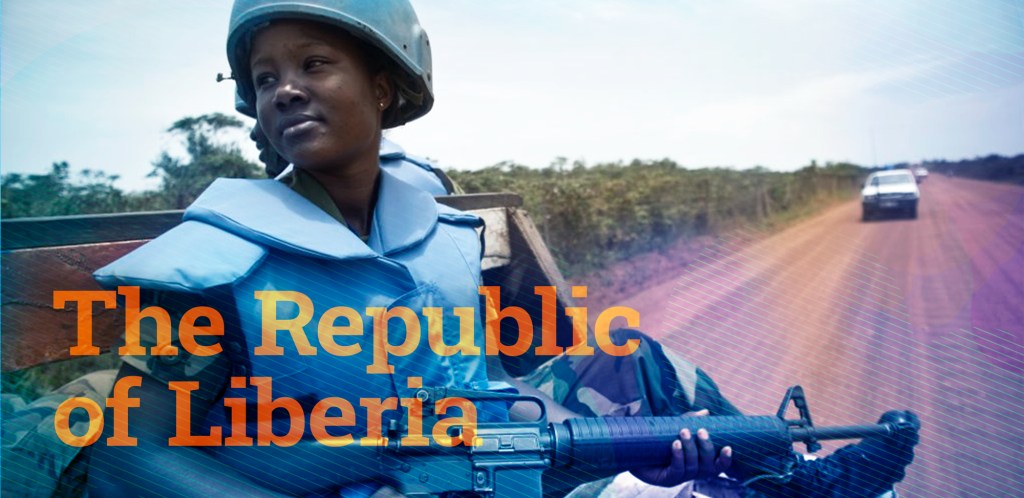
This project profile page contains information about The Republic of Liberia Armed Forces project including project results, impact, and effective practices. This page will be updated annually in line with EIF project reporting requirements.
Data source: United Nations Peace Security Data Hub, a free public library of datasets on peace and security published by the United Nations
T/PCC
Updates
2020
2021
2022
2023
2024
Total
%
Total
%
Total
%
Total
%
Total
%
Liberia
18
13.53%
22
12.79%
21
12.21%
18
11.54%
6
50.00%
Experts on Mission
3
75.00%
3
75.00%
3
75.00%
2
40.00%
2
50.00%
Individual Police
0
/
2
40.00%
3
37.50%
2
50.00%
4
50.00%
Staff Officer
1
8.33%
2
15.38%
2
16.67%
2
20.00%
0
/
Troops
14
11.97%
15
10.00%
13
8.78%
12
8.76%
0
/
The Republic of Liberia Armed Forces
The Armed Forces of Liberia (AFL) was re-established in 2006 as part of the country’s broader post-conflict recovery and security sector reform, following the end of Liberia’s civil war and under the guidance of the United Nations Mission in Liberia (UNMIL) and international partners. With a professional force of approximately 2,000 personnel, the AFL includes two battalions, specialised units, and a range of support services. It operates under the Ministry of National Defense, with oversight from the President as Commander-in-Chief. Liberia’s contributions to international peace support operations began in 2012 and include deployments to Syria, Mali, Sudan and South Sudan, positioning the AFL as a growing contributor to global peacekeeping efforts.
Recognising the importance of inclusive institutions, the AFL has taken steps to strengthen its internal policies and organisational culture. This includes the launch of a Gender Policy in 2022, and a targeted recruitment drive aimed at improving the gender balance within the force. These initiatives support broader national goals under Liberia’s National Action Plan on Women, Peace and Security and reflect the AFL’s continued commitment to institutional development and professionalism.
Project Overview
The Armed Forces of Liberia (AFL), in partnership with UN Women Liberia, undertook a comprehensive barrier assessment using the Measuring Opportunities for Women in Peace Operations (MOWIP) methodology developed by the Geneva Centre for Security Sector Governance (DCAF), to better understand the challenges affecting women’s meaningful participation in United Nations Peace Operations. The research wasconducted by the Kofi Annan Institute for Conflict Transformationin collaboration with Cornell University, usingPartnership model A.
The assessment aimed to:
1. Identify the main barriers to women’s meaningful participation within the ten issue areas outlined in the MOWIP methodology; 2. Identify existing good practices within the AFL that could be leveraged, scaled up, or shared more broadly; 3. Formulate a set of evidence-based recommendations for future activities to increase the participation of AFL women in United Nations peace operations; and 4. Provide a baseline to measure progress in overcoming barriers to women’s participation.
The findings are now being used toinform future reforms and programming to strengthen gender-responsive planning, recruitment, and deployment within the AFL. The project is also expected to support future participation in the Elsie Initiative Fund (EIF) to enhance the meaningful participation of uniformed women in United Nations Peacekeeping Operations.
Filter by year:
2022 Key Results
EIF OUTCOME 1 INSTITUTIONAL CAPACITY-BUILDING ON GENDER
0
surveys
600 surveys administered by the MOWIP enumerator team (57 women and 543 men)
0
MOWIP Report
1 MOWIP Report launched on 10 September 2022
0
interviews
33 interviews conducted with senior leadership, decision makers and program officers (4 women and 29 men)
PROJECT STATUS
Completed
EIF Results Framework
EIF Outcome 1
Total Approved EIF Budget
US$120,000
Funds transferred as of 31 December 2022
US$120,000
Beneficiary
AFL
Fund Recipient
UN Women Liberia
Implementing Partner
Kofi Annan Institute for Conflict Transformation
Planned Project Duration
12 months
Project Approval Date
22 January 2021
Project Start Date
3 March 2021
Project End Date
31 August 2022
Project Revision(s)
31 August 2022: no-cost extension: 6 months through 31 August 2022
Total Project Duration
18 months
Project Deliverables
MOWIP Barrier Assessment Report and recommendations
Results and Impact
The barrier assessment generated a comprehensive, evidence-based analysis of the challenges and opportunities influencing the participation of uniformed women in the AFL in peace operations. The findings are informing the Ministry of National Defense and AFL leadership as they design targeted reforms and institutional policies to strengthen gender inclusion. By providing a structured baseline and clear, actionable recommendations, the assessment is also guiding the development of initiatives—such as a national recruitment campaign and the renovation of housing facilities—to address identified barriers and increase the number of women eligible and prepared for United Nations Peacekeeping Operations.