
After two deployments to South Sudan and more than a decade of service in Jordan’s Public Security Directorate (PSD), Captain Tamara Almousleh understands that effective peacekeeping cannot be learned from manuals alone. From supporting vulnerable women and children in conflict-affected communities to conducting long-distance patrols and training local police, her experiences have shaped her approach to policing and leadership. Today, she is sharing those lessons with future deployees through Jordan’s Gender Capacity Building Centre (GCBC).
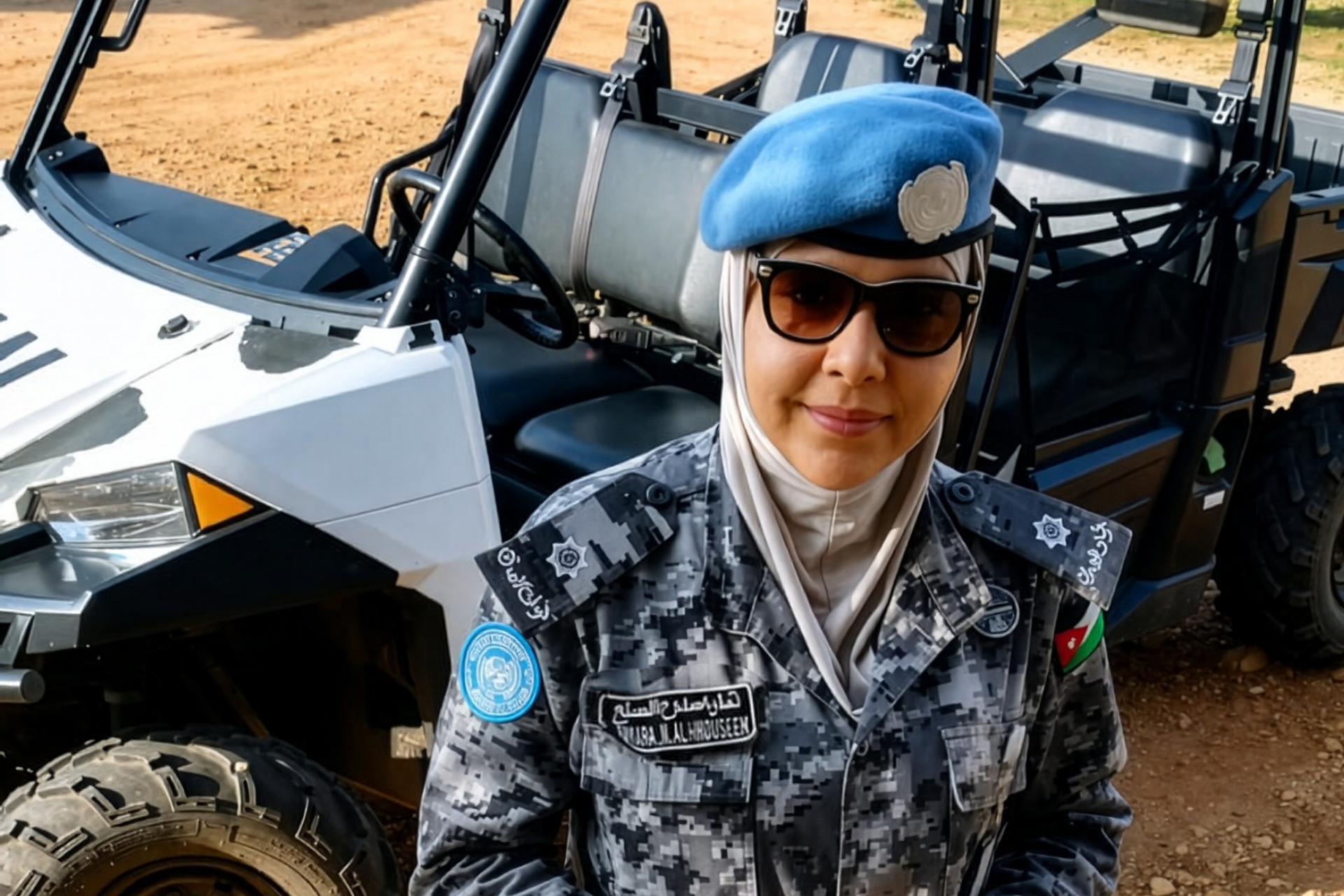
“When I speak to officers preparing for deployment, I always tell them that peacekeeping is about more than procedures and training manuals. The experiences gained in South Sudan taught me lessons that cannot be learned in a classroom alone, and today I am committed to sharing those lessons with others through Jordan’s GCBC.
My journey began in 2011, when I joined Jordan’s PSD. I chose a path that surprised many people, including myself. I spent six years in the Special Operations, or SWAT, unit, working alongside men and women in high-risk operations. Those years taught me discipline, resilience and confidence. Later, I moved into other policing roles, including community policing, child protection and intelligence support.
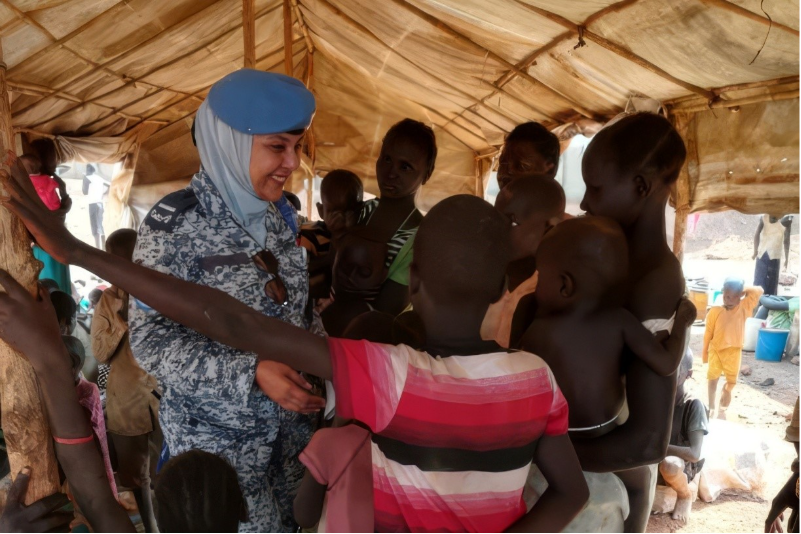
I deployed to South Sudan for the first time in 2017 and again in 2023. When people ask why I chose peacekeeping, my answer is simple: the children. Seeing the impact of conflict on women and children made me want to contribute in whatever way I could. When I arrived, I was shocked by the humanitarian situation, but I also saw the importance of building trust and supporting communities. Through community policing activities, my colleagues and I worked to strengthen relationships between communities and the police.
In particular, we listened, facilitated dialogue and encouraged women to speak about their concerns and experiences. I learned that understanding people, respecting their culture and communicating openly are essential parts of effective peacekeeping. We also supported survivors to report cases of conflict-related sexual violence, helping them pursue justice and, in some cases, secure convictions.
Some of the experiences that stay with me are the small moments. I remember encouraging a young woman working in our camp to continue her education. Later, she contacted me to say she was studying nursing at university. Knowing that a few conversations helped her take that step remains one of the proudest moments of my career.
Today, I share these experiences with future peacekeepers. Through mentoring and training, I help officers understand what deployment may look like in practice, how to work with local communities and how to prepare themselves for the challenges they may face. I strongly believe that knowledge should be shared.
As I often tell my colleagues, “When you share knowledge, it grows. If you keep it to yourself, nothing changes.” Through the GCBC, I can pass on lessons learned in the field and help prepare the next generation of women officers to serve with confidence, professionalism and humanity.”
The Gender Capacity Building Centre (GCBC), supported by the Elsie Initiative Fund, forms part of Jordan’s broader efforts to strengthen gender-responsive policing and peacekeeping. The Centre serves as a hub for specialized courses, knowledge exchange and professional development, supporting PSD’s efforts to mainstream gender across its policies and operations. It creates opportunities for mentoring, peer learning and the sharing of lessons learned from the field. The PSD ultimately envisions the Centre as a regional center of excellence for gender training, helping prepare personnel to serve effectively in Jordan and in international peace operations, as well as contributing to raising awareness and encouraging participation in peacekeeping operations in cooperation with the Department of Peacekeeping Operations.


