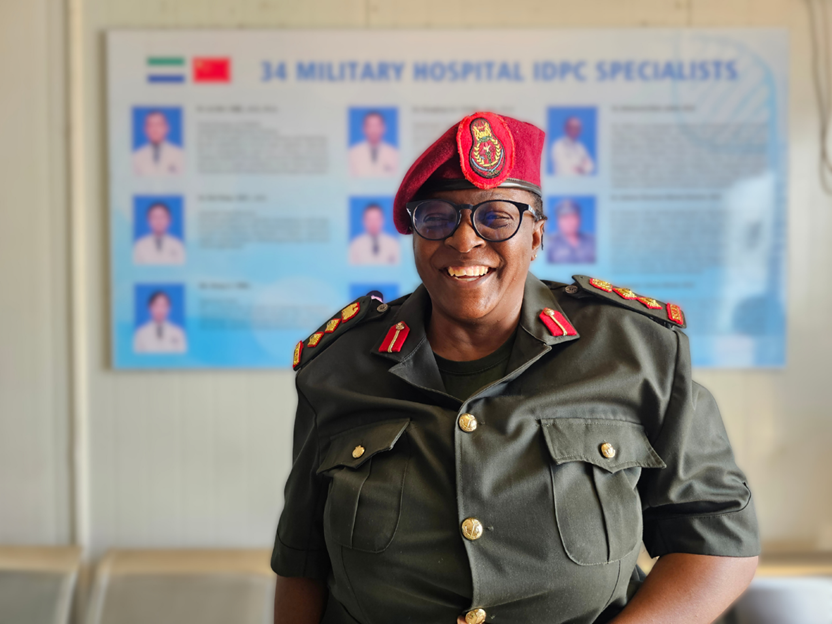
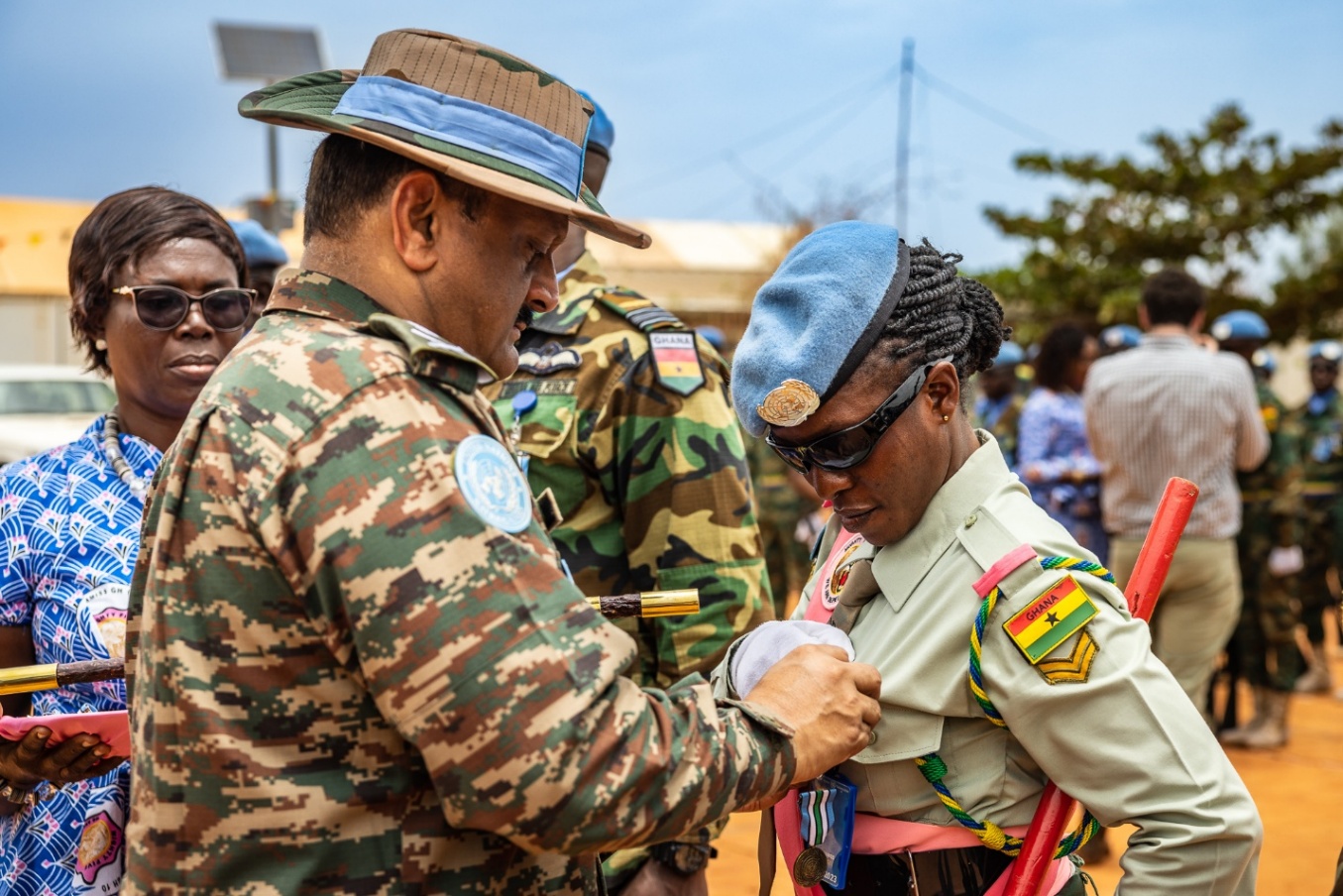
One year after making history as the first woman to command an infantry battalion in the Republic of Sierra Leone Armed Forces (RSLAF), Lieutenant Colonel Alice Sesay reflects on leadership and lessons that have come with the role. Beyond the 14th Battalion’s operational success, she hopes to set an example that reinforces women’s leadership into institutional culture.

From being one of two women in her basic training two decades ago, to becoming commander, Sesay explains her rise has never been a privilege and comes “with a lot of mixed feelings.” She explains, “while there’s a happiness about breaking that glass ceiling, as a woman at the helm of a battalion there is also a weight of expectation, and a feeling that you have to work three times harder than male counterparts to prove yourself. You do not want to become the reason other women are denied similar opportunities.”
Leading from the front
A key part of Sesay's leadership has been to ensure she is visible and approachable to her unit. She devised refresher training to strengthen understanding of key staff positions and maintains an open-door policy, encouraging all personnel to raise concerns directly with her. “Being willing to engage ensures your soldiers do not see you as someone simply occupying space, but someone they can count on for direction and guidance,” she explains. This approach extends beyond the office, as she leads major operational activities, including a joint border exercise with the Armed Forces of Liberia in February 2026, where she served as exercise coordinator.
Her leadership style has also been shaped by international experience, serving in two United Nations peace operations. She credits peacekeeping with broadening her understanding of diversity, multinational cooperation and community engagement, lessons that continue to inform her command today.
Balancing act
Sesay also sees her position as an opportunity to challenge deeply rooted gender norms in the defence sector as she believes that some still hold cynical views that “women appointed to command are there to fulfil gender policies.”
She wants to become a positive role model for both men and women to look up to. For that, Sesay wants to develop her own leadership style and not one that has to fit traditional ideas of what women leaders should be. She explains, “When you act soft it can be seen as weakness and not fit for the role; when you act tough and assertive, you can be criticised for being as harsh and unwomanly,” she says. “Finding a leadership style that earns respect without being penalised is a constant balancing act.”
Those experiences have reinforced her belief that effective leadership depends less on stereotypes and more on fundamental qualities such as integrity, sound judgment, courage, empathy and decisiveness. Importantly, Sesay also confirms, “You should also never be uncomfortable in consulting others when you’re looking to learn. You don’t always need to know everything.”
Senior leadership's recognition of Lieutenant Colonel Sesay’s ability comes at a time of renewed acceleration from the RSLAF to strengthen pathways for women across the institution. Before her promotion to command the 14th Battalion, Sesay also played a leading role in developing the RSLAF project proposal to the Elsie Initiative Fund, helping shape efforts to address barriers to women's meaningful participation in peacekeeping. With support from the Fund, the RSLAF, in partnership with UN Women, is addressing barriers to women's meaningful participation in peacekeeping. Such efforts help create an environment where leadership potential can be recognised and advanced based on ability, benefiting both the institution and future generations of servicewomen.
Lasting change in women’s leadership will be measured by more than Sesay’s rise, as she confirms, “It is not about me anymore. I want to see women become Brigade Commanders, Chief of Army Staff and, possibly, Chief of Defence Staff. I’m hoping my example of leadership can set the pace for others.”
Originally published by UN Women.